
Case Study
Resources >> Case Study >>
Dynamic Assignment Management
CS/26/AERO/013
Dynamic Assignment Management
Participant changes while workflow is in progress
Business Challenge
PLM workflows often operate in dynamic environments where reviewer availability, expertise, or responsibility can change during an active approval process. However, existing workflows were rigid and lacked the flexibility to accommodate these real‑time changes.
Once a workflow was initiated, modifying reviewer assignments typically required restarting or redesigning the workflow. This caused delays, increased administrative effort, and disrupted approval continuity. Removing unavailable reviewers or adding subject‑matter experts mid‑process was especially difficult, and tracking such changes for audit and compliance purposes was limited.
The organization needed a way to adapt reviewer assignments dynamically while ensuring workflow continuity, approval logic integrity, and full traceability.
Solution
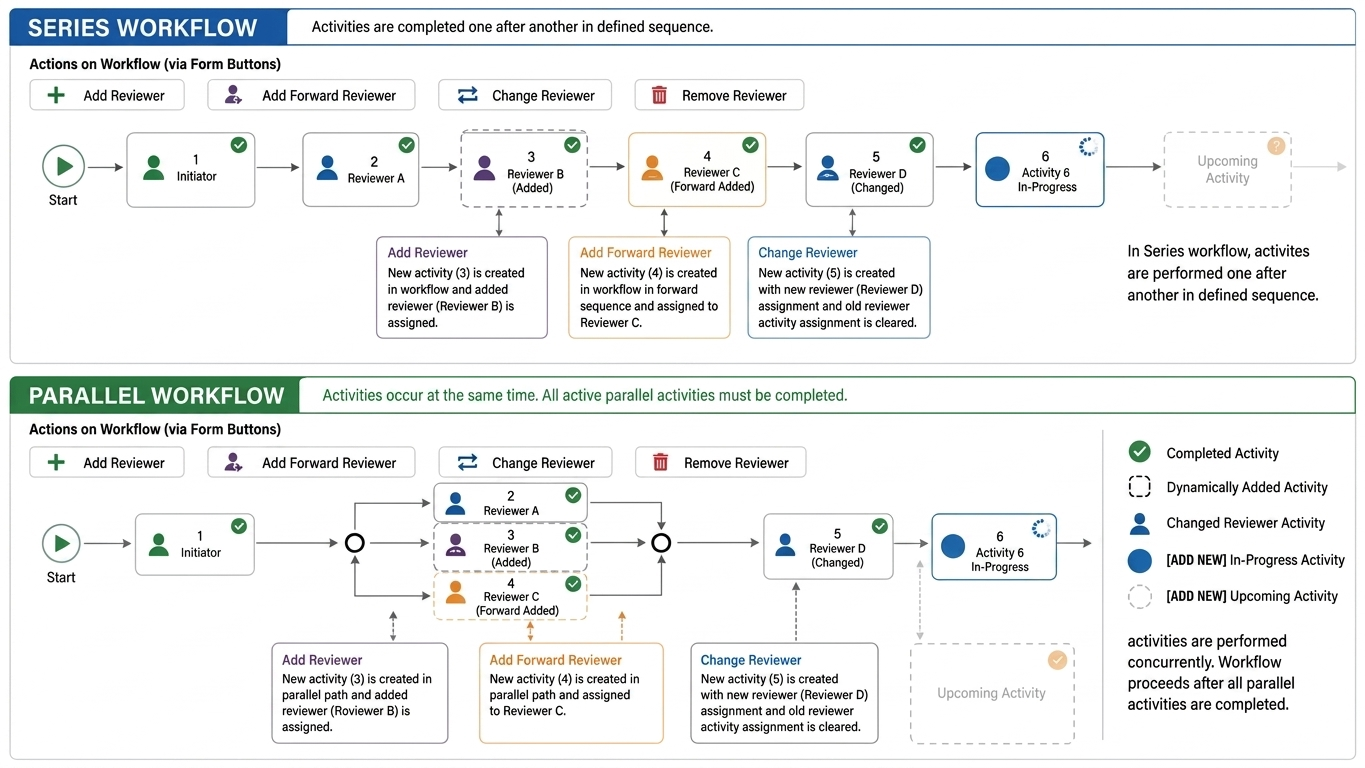
Dynamic Assignment Management was introduced to enable real‑time modification of reviewer assignments within active PLM workflows. Authorized users were provided with configurable actions—Add Reviewer, Add Forward Reviewer, Change Reviewer, and Remove Reviewer—that could be executed directly within the workflow.
Reviewer changes were applied without interrupting the workflow and remained consistent with the defined review behavior, whether Series or Parallel. When reviewers were removed, the system automatically performed a system-generated vote and updated activity assignments to allow the workflow to proceed. All assignment changes were recorded as signoff comments, ensuring visibility and audit readiness.
Objectives
- Enable real‑time reviewer assignment changes within active workflows
- Prevent workflow disruptions caused by reviewer availability issues
- Preserve workflow logic and approval behavior
- Ensure traceability of all reviewer assignment changes
Results & Business Impact
The introduction of Dynamic Assignment Management significantly improved workflow efficiency and adaptability. Users were able to respond quickly to changing review requirements without restarting workflows or engaging administrative support.
Approval processes continued without interruption, reducing delays and bottlenecks. Workflow integrity was preserved through system-controlled actions, and every reviewer change was fully traceable for audits and process reviews. Overall, workflows became more resilient, faster, and better aligned with real operational needs.
Conclusion
Dynamic Assignment Management transformed static PLM workflows into flexible, adaptive processes. By enabling real‑time reviewer changes without disrupting active workflows, the solution reduced delays, improved governance, and strengthened auditability. The organization achieved a more agile workflow environment that supports both operational efficiency and compliance, ensuring approvals move forward even in changing circumstances.