
Case Study
Resources >> Case Study >>
Automated Release Dependency Management
CS/26/AERO/015
Automated Release Dependency Management
Client Profile
A global manufacturing organization operating in highly regulated aerospace industry relied on complex document management processes to maintain quality, compliance, and operational accuracy across multiple business functions
Business Problem
- Manual Tracking: Relied on a manual, error-prone process for tracking several dependent documents that needed to be released together.
- Inconsistent Coordination: Faced a lack of coordination that caused inconsistencies across dependent documents, resulting in partial releases.
- Compliance Risks: Incurred risks for incorrect sequencing and non-compliance due to a lack of system-driven validation.
- Version Confusion: Suffered from versioning confusion, as an updated document did not automatically align with its coordinated document
Proposed Solution
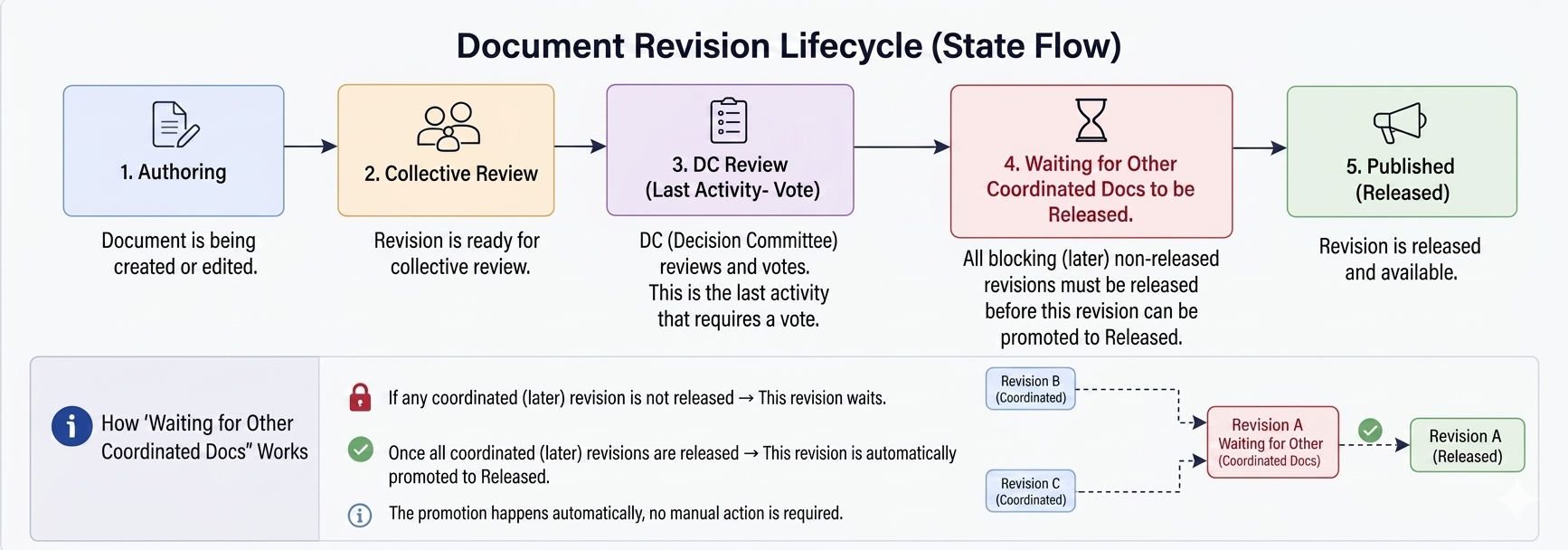
- Introduced a new relationship tab labelled “Coordinated Docs to Release” to categorize dependent documents.
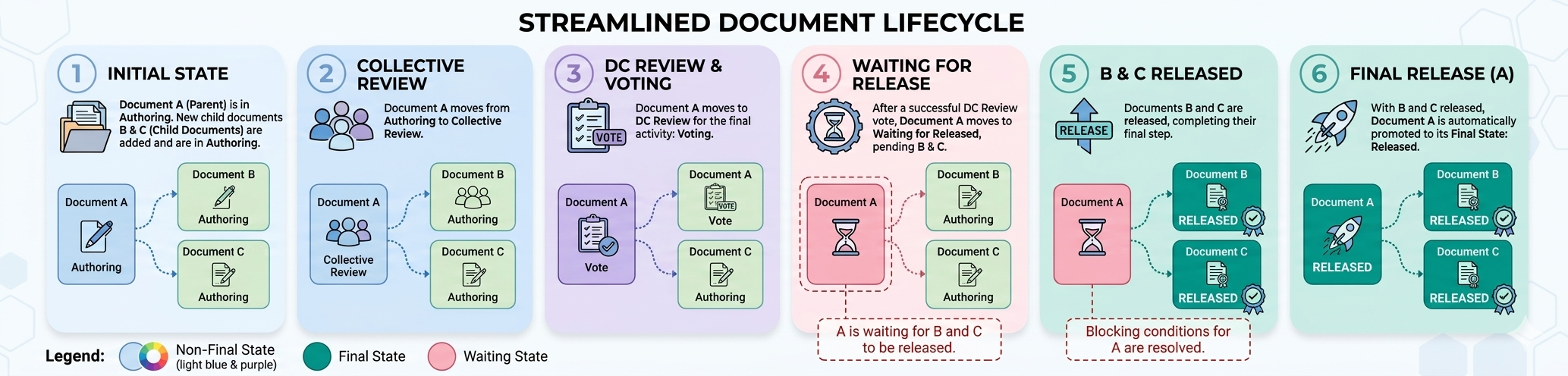
- Developed a new lifecycle state, “Waiting for Release,” to manage parent documents and workflow activities for controlled, synchronized releases.
- Implemented new logic to promote a document to a ‘released’ state only after all related documents were released.
- Established additional controls to prevent:
- Releasing a document that had already been released.
- Creating duplicate or conflicting relationships between related documents.
- Obsoleting a document that was still part of an active workflow.
- Automated the synchronization of document versions and the removal of obsolete documents.
- Resolved the Oracle integration issue to prevent uploading documents in incorrect states.
Business Impact Summary
These solutions eliminated partial releases and achieved 100% target fulfilment for document releases, which enhanced data consistency across QDM. Document release automation delivered the following impacts:
- Increased Productivity: Decreased reliance on manual handling, reducing processing errors.
- Enhanced Compliance: Improved data traceability and audit capabilities.
- System Integration: Reduced errors in downstream systems.